Aucun message portant le libellé Logique | Logic. Afficher tous les messages

mardi 13 septembre 2016

Models in Geometry and Logic (P. Blanchette)

Conférence | Talk


(University of Notre-Dame)


Models in Geometry and Logic


One of the core questions in the philosophy of logic is the extent to which the formal tools of modern logic are faithful to the ordinary, non-formal notions that originally motivate work in logic.  This talk discusses the question of faithfulness as it applies to the notions of consistency and independence, and in particular to the use of models to show that these relations obtain.  The strategy of this talk is to discuss the development of the modern notion of model from its origins in nineteenth century geometry through its canonical formulation in the early twentieth century, and to discuss various ways in which the use of this tool does, but also various ways in which it does not, allow us to answer ordinary, non-formal questions of consistency and independence of the sort that a non-logician might be interested in.


Friday, September 23rd, 2016
3:00pm

University of Ottawa
Desmarais Hall
Room 8161

vendredi 27 mars 2015

Begging to Differ with Similarity Accounts of Counterfactuals (A. Hajek)

Conférence | Talk


(Australian National University)


Begging to Differ with Similarity Accounts of Counterfactuals

Widespread agreement among philosophers on a given topic is rare. However, it is enjoyed by similarity accounts of counterfactuals. Roughly, they say that the counterfactual "if p were the case, q would be the case" is true if at the nearest pworlds, q is true. I disagree with such accounts, for many reasons.


Friday, March 27th, 2015
3:00pm

Carleton University
River Building

mardi 21 octobre 2014

jeudi 11 septembre 2014

Justification of Deduction and Induction (F. Huber)

Conférence | Talk


(University of Toronto)


Justification of Deduction and Induction


This talk will cover some, but not all parts of a rather lengthy paper. The latter's thesis is that we can justify induction deductively, and that we can justify deduction inductively. I will begin by presenting my preferred variant of Hume (1739; 1748)'s argument for the thesis that we cannot justify the principle of induction. Then I will criticize the responses the resulting problem of induction has received by Carnap (1963; 1968) and by Goodman (1954), as well as briefly praise Reichenbach (1938; 1940)'s approach. 
Some of these authors compare induction to deduction. Haack (1976) compares deduction to induction, and I will critically discuss her argument for the thesis that we cannot justify the principles of deduction next. In concluding I will defend the thesis that we can justify induction by deduction, and deduction by induction, and that we can do so in a non-circular way. Along the way I will show how we can understand deduction and induction as normative theories, and I will argue that there are only hypothetical, but no categorical imperatives.


Friday, September 19th, 2014
3:00pm

University of Ottawa
Desmarais Hall (55, Laurier East)
Room 8161

mercredi 10 septembre 2014

Hegel Workshop

Atelier | Workshop


Hegel's Logic

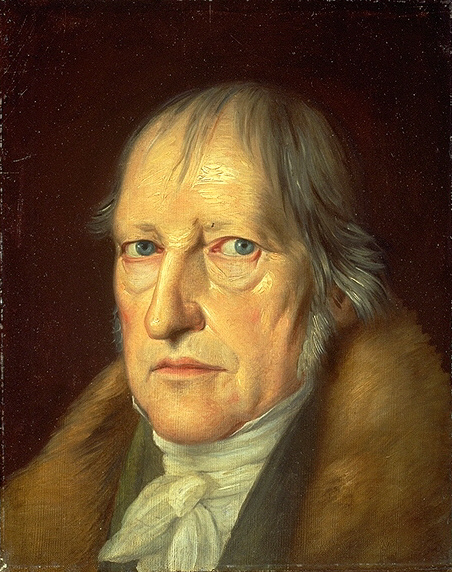
John Burbidge (Trent University – Emeritus), noted Hegel scholar (The Logic of Hegel’s Logic) and external examiner for Wesley Furlotte’s upcoming PhD thesis defence, has agreed to lead an informal discussion on Hegel’s Logic (his own experience with its challenges, solutions etc.)

Source : Wikipedia
Friday, September 19th, 2014
3:00pm

University of Ottawa
Desmarais Building
Room 9143

lundi 24 mars 2014

Bolzano's Theory of Collections : A Chapter in the history of Formal ontology (P. Rusnock)

Conférence | Talk


(University of Ottawa)


Bolzano's Theory of Collections : A Chapter in the history of Formal ontology


Source : Wikipedia


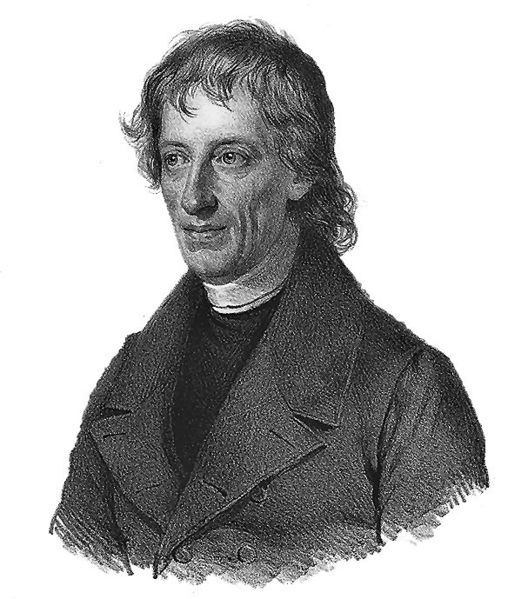
Bernard Bolzano (1781-1848) is now widely recognized for his prescient work in logic.  It is less well known that he was equally creative in the area Husserl called formal ontology.  His most important contribution there was his theory of collections [Inbegriffe], which received several different treatments in his published and unpublished writings, beginning with the of the Contributions to a Better-Grounded Presentation of Mathematics (1810), and continuing right through to the posthumously published Paradoxes of the Infinite (1851).  Bolzano's twentieth-century readers mostly tried to make sense of Bolzano's theory in terms of Cantor's set theory and Lesniewski's mereology.  But although Bolzano's theory has affinities with both of these better-known systems, it is different in its details, scope and approach.  My talk will give a general introduction to his mature theory of collections, discuss some of its applications,  and point towards some areas for future research.


Friday, March 28th, 2014
3:00pm

University of Ottawa
Desmarais Hall (55, Laurier East)
Room 8161

mercredi 15 janvier 2014

Intentional Objects and their properties : a critical appraisal of Meinongian Logics (B. Leclerq)

Conférence | Talk


(Université de Liège)


Intentional Objects and their properties : a critical appraisal of Meinongian Logics


Source : Wikipedia

According to Alexius Meinong, statements such as "The round square is round (and square)", "The golden mountain is made of gold", "Pegasus has big wings" or "Unicorns have a horn on their forehead" should be seen as talking about some genuine (yet inexistent or even impossible) objects, and should be considered as true or false whether these objects possess the properties that are here attributed to them or not. On the contrary, Frege and Russell's logical analyis tends to make these "objects" appear as concepts (or propositional functions) that can be meaningful eventhough they are not satisfied by any object at all. After a brief presentation of Meinongian logics as well as of their benefits and drawbacks compared to classical logic as well as to standard modal logics, we will show that Meinongian logics not only require a clear-cut distinction between two kinds of properties (nuclear and extranuclear) but also between two kinds of predications (encoding and exemplification) and, eventually, between two kinds of objects (those which encode and those which exemplify their properties), which somehow restores Frege's clear-cut distinction between concepts and objects as well as between first order and second order properties. 

Friday, January 17th, 2014
3:00pm

University of Ottawa
Desmarais Hall (55, Laurier East)
Room 8161

jeudi 25 octobre 2012

Sheffer and Notational Relativity (A. Urquhart)


Conférence | Talk


(Emeritus, Philosophy and Computer Science, University of Toronto)


Sheffer and Notational Relativity


Friday, November 2nd, 2012
3:00pm

University of Ottawa
Arts Hall
Room 509