Toute l'activité philosophique de la région d'Ottawa | Everything about Ottawa's philosophical life
Aucun message portant le libellé Philosophie du langage | Philosophy of Language. Afficher tous les messages
lundi 26 janvier 2026
lundi 12 juillet 2021
jeudi 12 septembre 2019
mardi 10 septembre 2019
mardi 27 janvier 2015
Asserting versus Merely Communicating (R. Stainton)
Conférence | Talk
(University of Western Ontario)
Asserting versus Merely Communicating
Friday, January 30th, 2014
My question
pertains to the contrast mentioned in the title, namely what distinguishes
full-on assertion of a proposition from merely communicating it? For instance,
what distinguishes asserting that you have not smoked crack cocaine from merely
conveying that thought? Put slightly differently, consider two broad classes of
speakings:
A.
Asserting, affirming, claiming, stating, declaring, avowing, professing;
B. Giving
to understand, implying, suggesting, conveying, intimating, insinuating,
hinting.
I am asking about what the difference is between
those in the A-Class and those in the BClass. The game plan is straightforward.
I begin with several familiar accounts of assertion, in extremely simplified form.
Borrowing ideas from Dummett among others, I then sketch an alternative
position, in part by comparing assertion to promising. I round out the paper with
replies to objections.
3:00pm
Carleton University
Dunton Tower
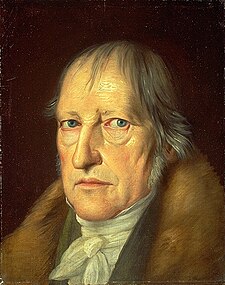
Ful-filling the Copula, Determining Nature : The Grammatical Ontology of Hegel's Metaphysics (J. Reid)
Conférence | Lecture
(University of Ottawa)
Ful-filling the Copula, Determining Nature : The Grammatical Ontology of Hegel's Metaphysics
Friday, January 30th, 2014
Both continental and analytic traditions have tended
to associate Hegel's idealism with metaphysics and therefore as divorced from
and even pernicious to reality. Hence, contemporary Hegel studies have tended
to concentrate on discrete elements of his philosophy while attempting to avoid
its metaphysical dimensions and their systematic pretensions. I seek to
show that rather than dwelling in abstraction, Hegel's metaphysics, as
presented in his Logics, recount the thought determinations through which being
comes to be, for us. Such determining is essentially linguistic, taking place
through the grammatical forms of judgement (Urteil) and their outcome in the
syllogism. The centrality of these grammatical forms reveals the
anthropological goal of Hegel's metaphysics, where the fully determined copula
presents itself in the form of humanly knowable being: nature. Briefly
put, within the economy of Hegel's Encyclopedic system, his metaphysics deduce
the scientific knowability of nature.
Friday, January 30th, 2014
3:00pm
University of Ottawa
Desmarais Hall (55, Laurier East)
Room 8161
mardi 23 septembre 2014
Hermeneutic Fictionalism: A Guide for the Perplexed (G. Contessa)
Conférence | Talk
(Carleton University)
Hermeneutic Fictionalism: A Guide for the Perplexed
Friday, September 26th, 2014
Hermeneutic fictionalism (about some class of entities (e.g.: numbers, propositions, possible worlds, moral properties, or aesthetic properties)) is the view that ordinary speakers engage with sentences that seem to refer to or quantify over those entities analogously to how they engage with the contents of works of fiction—i.e. by participating in an elaborate pretence. One standard objection to hermeneutic fictionalism is that pretence is luminous (i.e. one cannot pretend without knowing one is pretending) and that ordinary speakers do not usually see themselves as engaging in pretence when engaging in the relevant discourse. In this paper, I will argue that, contrary to what is usually assumed, one can engage in pretence without being fully aware of that fact that one is doing so.
Friday, September 26th, 2014
3:00pm
Carleton University
River Building
samedi 21 septembre 2013
Meaning, Use and Language: From Cratylus to Philosophical Investigatons (A. Vohra)
Conférence | Talk
(University of Delhi)
3:00pm
Carleton University
River Building
Room 3110
S'abonner à :
Messages (Atom)