mardi 27 janvier 2015

Ful-filling the Copula, Determining Nature : The Grammatical Ontology of Hegel's Metaphysics (J. Reid)

Conférence | Lecture


(University of Ottawa)


Ful-filling the Copula, Determining Nature : The Grammatical Ontology of Hegel's Metaphysics
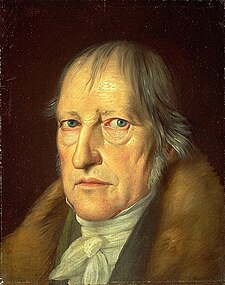


Both continental and analytic traditions have tended to associate Hegel's idealism with metaphysics and therefore as divorced from and even pernicious to reality. Hence, contemporary Hegel studies have tended to concentrate on discrete elements of his philosophy while attempting to avoid its metaphysical dimensions and their systematic pretensions.  I seek to show that rather than dwelling in abstraction, Hegel's metaphysics, as presented in his Logics, recount the thought determinations through which being comes to be, for us. Such determining is essentially linguistic, taking place through the grammatical forms of judgement (Urteil) and their outcome in the syllogism. The centrality of these grammatical forms reveals the anthropological goal of Hegel's metaphysics, where the fully determined copula presents itself in the form of humanly knowable being:  nature.  Briefly put, within the economy of Hegel's Encyclopedic system, his metaphysics deduce the scientific knowability of nature.

Friday, January 30th, 2014
3:00pm

University of Ottawa
Desmarais Hall (55, Laurier East)
Room 8161

Pourquoi la philosophie ? | Why Philosophy?


mardi 20 janvier 2015

Hope, Knowledge, and Blindspots (J. Dodd)

Conférence | Talk


(Carleton University)


Hope, Knowledge, and Blindspots

I use Roy Sorensen’s work on epistemic blindspots and Luc Bovens’s study of hope to show: (i) that is easy for epistemic-spesic blindspots to occur, (ii) that this often makes it easy for agents to lose access to the epistemic value of any particular hope, and (iii) that together (i) and (ii) reveal an unnoticed way both in which agents may do epistemic harm by gaining knowledge or instilling it in others and in which agents may engage in either epistemically reckless or epistemically weak-willed acts.


Friday, January 23rd, 2014
3:00pm

Carleton University
River Building

mardi 13 janvier 2015

On Translating Religious Reasons: Rawls, Habermas and the Quest for a Neutral Public Sphere

Conférence | Talk


(University of Ottawa)


On Translating Religious Reasons: Rawls, Habermas and the Quest for a Neutral Public Sphere


Friday, January 16th, 2014
3:00pm

Carleton University
River Building

mercredi 7 janvier 2015

Aesthetics Experts, Guides to Value (D. McIver Lopes)

Conférence | Lecture


(University of British Columbia)


Aesthetics Experts, Guides to Value


A theory of aesthetic value should explain the performance of aesthetic experts, for aesthetic experts are agents whose acts track aesthetic value. Aesthetic empiricism, the theory that an item’s aesthetic value is its power to yield aesthetic pleasure, suggests that aesthetic experts are best at locating aesthetic pleasure, especially given aesthetic internalism, the view that aesthetic reasons always have motivating force. Problems with empiricism and internalism open the door to an alternative. Aesthetic experts perform a range of actions not aimed at pleasure. Yet their reasons for acting are aesthetic. Since aesthetic values figure in aesthetic reasons, we can read a non-empiricist theory of aesthetic value off aesthetic experts’ reasons for acting.

Friday, January 16th, 2014
3:00pm

University of Ottawa
Desmarais Hall (55, Laurier East)
Room 8161

lundi 8 décembre 2014

Is There a Phenomenology of Agency? (M. Mylopoulos)

Conférence | Talk


(Carleton University and Institut Jean Nicod)


Is There a Phenomenology of Agency?


It is often held that, just as there is something it is like to smell a rose, taste chocolate, and hear a siren, there is something it is like to perform an action. In other words, a view to which many people are drawn is that there exists a phenomenology of agency. But while this is a common starting point for further theorizing, rarely is it critically examined on its own. In this paper, I aim to remedy this situation. First, I clarify what theorists seem to have in mind when they claim that there is a distinctive, proprietary phenomenology of agency. Next, I canvass particular strategies for establishing that there is such a thing. To begin, I explain why introspection alone will not suffice for this task. Following this, I introduce and employ the socalled method of phenomenal contrast (cf. Siegel 2012), presenting contrasting pairs of cases, for which, in the one case, agentive phenomenology may seem to be present, and in the other, absent. I offer two types of skeptical response to such cases, which serve to block the inference to the best explanation that is required in order to establish the existence of agentive phenomenology on their basis. I then consider two further strategies for dealing with these skeptical responses. I label these the robust conceivability strategy (Horgan 2012) and the epistemic access strategy (cf. Goldman 1993; Pitt 2004). I argue that each of these fails to offer a satisfactory response to the skeptics, and therefore to give us good reason to believe that there is a phenomenology of agency. I conclude that skepticism about the existence of such phenomenology is alive and well. In the final section of the talk, I explain why, even given this result, all hope is not lost. I offer an account of conscious action that falls short of establishing that it is accompanied by any distinct, proprietary phenomenology, but arguably retains all the robust features of our awareness of ourselves as acting that theorists interested in this phenomenon set out to explain in the first place.

Tuesday, December 9th, 2014
3:00pm

Carleton University
Dunton Tower