mardi 3 février 2015

Space-Time and the Observer: In Defence of Objective Structrure (J. Mozersky)

Conférence | Lecture


(Queen's University)


Space-Time and the Observer: In Defence of Objective Structrure

To begin, I briefly recap (and defend) an old story: (1) Newton provides an account of space and time that renders them imperceptible and immutable; (2) Kant later argues that space and time receive their (necessarily Newtonian) structure from the forms of intuition; (3) Newton’s account of space and time is shown by Einstein to be inadequate; (4) this, therefore, spells the end for the Kantian approach to metaphysics.
I then raise what is for me a puzzling question: why do so many contemporary philosophers of science and metaphysicians adhere to a neo-Kantian picture, according to which the world gains its structure from our representations or representational activities?  Of great influence here is the work of two seminal 20th Century philosophers: Hilary Putnam and Nelson Goodman.  So, I turn next to a consideration of their arguments.  I find them to be question begging and, indeed, self-undermining, and I think it is illuminating to see why.
I conclude with some thoughts on the bigger picture: in what direction might the philosophy of science and metaphysics move if freed from the influence of Kant.

Friday, February 6th, 2014
3:00pm

University of Ottawa
Desmarais Hall (55, Laurier East)
Room 8161

lundi 2 février 2015

Real Democracy and Joint Decisions (R. Ware)

Conférence | Talk


(University of Calgary/University of Carleton)


Real Democracy and Joint Decisions


Friday, February 6th, 2015
3:00pm

Carleton University
River Building

mercredi 28 janvier 2015

Traduire Platon à la Renaissance (C. LeBlanc)

Conférence – Les Trésors de la bibliothèque : Traduire Platon à la Renaissance
Une présentation de la première traduction inédite du Phédon de Platon en langue française
Par Charles Le Blanc
Professeur agrégé à l’École de traduction et d’interprétation
Le 11 février  à 12 h
Pavillon Morisset (MRT 039)

Lecture – Treasures of the Library: Translating Plato during the Renaissance
Presentation on the first known French-language translation of Plato’s Phaedo (In French only)
By Charles Le Blanc
Associate professor at the School of Translation and Interpretation
February 11 at 12:00 pm
Morisset Hall (MRT 039)

Source : Wikipedia


Un élément caractéristique de la Renaissance est la montée en force de la philosophie de Platon par rapport à celle d’Aristote qui est surtout associée à la fin du Moyen-Âge. Cette prédilection pour une relecture des œuvres de Platon a entraîné un effort de traduction renouvelé dont témoigne le « Manuscrit d’Ottawa ». Ce trésor de la Bibliothèque de l’Université d’Ottawa, conservé aux Archives et collections spéciales, présente une traduction inédite du Phédon de Platon, soit la première traduction d’une œuvre de Platon en langue française. La conférence s’articule autour de ce manuscrit et procède à sa captivante mise en contexte.

mardi 27 janvier 2015

Asserting versus Merely Communicating (R. Stainton)

Conférence | Talk


(University of Western Ontario)


Asserting versus Merely Communicating

My question pertains to the contrast mentioned in the title, namely what distinguishes full-on assertion of a proposition from merely communicating it? For instance, what distinguishes asserting that you have not smoked crack cocaine from merely conveying that thought? Put slightly differently, consider two broad classes of speakings:
A. Asserting, affirming, claiming, stating, declaring, avowing, professing;
B. Giving to understand, implying, suggesting, conveying, intimating, insinuating, hinting.
I am asking about what the difference is between those in the A-Class and those in the BClass. The game plan is straightforward. I begin with several familiar accounts of assertion, in extremely simplified form. Borrowing ideas from Dummett among others, I then sketch an alternative position, in part by comparing assertion to promising. I round out the paper with replies to objections.


Friday, January 30th, 2014
3:00pm

Carleton University
Dunton Tower

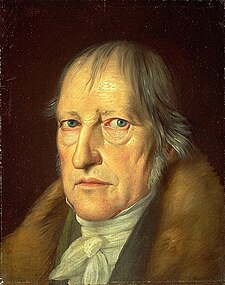
Ful-filling the Copula, Determining Nature : The Grammatical Ontology of Hegel's Metaphysics (J. Reid)

Conférence | Lecture


(University of Ottawa)


Ful-filling the Copula, Determining Nature : The Grammatical Ontology of Hegel's Metaphysics


Both continental and analytic traditions have tended to associate Hegel's idealism with metaphysics and therefore as divorced from and even pernicious to reality. Hence, contemporary Hegel studies have tended to concentrate on discrete elements of his philosophy while attempting to avoid its metaphysical dimensions and their systematic pretensions.  I seek to show that rather than dwelling in abstraction, Hegel's metaphysics, as presented in his Logics, recount the thought determinations through which being comes to be, for us. Such determining is essentially linguistic, taking place through the grammatical forms of judgement (Urteil) and their outcome in the syllogism. The centrality of these grammatical forms reveals the anthropological goal of Hegel's metaphysics, where the fully determined copula presents itself in the form of humanly knowable being:  nature.  Briefly put, within the economy of Hegel's Encyclopedic system, his metaphysics deduce the scientific knowability of nature.

Friday, January 30th, 2014
3:00pm

University of Ottawa
Desmarais Hall (55, Laurier East)
Room 8161

Pourquoi la philosophie ? | Why Philosophy?


mardi 20 janvier 2015

Hope, Knowledge, and Blindspots (J. Dodd)

Conférence | Talk


(Carleton University)


Hope, Knowledge, and Blindspots

I use Roy Sorensen’s work on epistemic blindspots and Luc Bovens’s study of hope to show: (i) that is easy for epistemic-spesic blindspots to occur, (ii) that this often makes it easy for agents to lose access to the epistemic value of any particular hope, and (iii) that together (i) and (ii) reveal an unnoticed way both in which agents may do epistemic harm by gaining knowledge or instilling it in others and in which agents may engage in either epistemically reckless or epistemically weak-willed acts.


Friday, January 23rd, 2014
3:00pm

Carleton University
River Building