mardi 8 mars 2016

Conference on Practical Philosophy: Problems, Conflicts, and Solutions

The Centre on Values and Ethics at Carleton University presents: 
CONFERENCE ON PRACTICAL PHILOSOPHY: PROBLEMS, CONFLICTS, AND SOLUTIONS
Friday, March 11th and Saturday, March 12th 2016.
Carleton University
Full Conference Program Here: COVE program 2016
Keynote Speaker: Waheed Hussain, University of Toronto http://www.philosophy.utoronto.ca/directory/waheed-hussain
KEYNOTE ADDRESS:
CONSUMER COMPLICITY, SOCIAL ROLES AND THE ILLUSIONS OF PRIVATE PROPERTY
Many people believe that if you purchase a product that is made with child labor, then you are morally complicit in the immoral treatment of the child labourers (e.g. Schwartz 2012).  Complicity has become central to the way that many consumers, activists and marketers think about the obligations of consumers.
In this paper, I argue that complicity is the wrong way to think about consumer ethics. Even in cases where consumers knowingly purchase products produced with child labor, they are not complicit in the immoral treatment of the child laborers.  The reason is that the global market is not an arena in which unrelated actors enter into relations for the first time. The market is an ongoing social institution that defines specific roles for consumers, producers and states.  If consumers do their part in the institution by making purchases based on price-quality considerations, and some unscrupulous producers fail to do their part, violating the rights of workers, then the producers themselves are engaged in the wrongful acts all on their own.
Instead of complicity, I argue that the duties of consumers are best understood in terms of a natural duty that we all have to preserve the legitimacy of a social institution when there is significant noncompliance with the rules (Hussain 2012).  If there is no referee at your pickup hockey game, then the duty of enforcing the rules devolves to all of the players collectively.  In much the same way, when states are not enforcing the rules of the global market, then all market participants, including consumers, have a special obligation to punish those who break the rules.

mercredi 2 mars 2016

Nature et pensée éthique: réflexions sur Laudato Si | Nature and Ethical Thought: Reflections on Laudato Si


Nature et pensée éthique: réflexions sur Laudato Si | Nature and Ethical Thought: Reflections on Laudato Si


Date: 
7 mars, 2016 - 09:00 - 8 mars, 2016 - 16:30  
Lieu: Collège universitaire dominicain, 96 avenue Empress, Ottawa (ON)


La publication de l’encyclique Laudato Si du pape François a contribué à replacer la question de l’écologie au centre de l’actualité mondiale.  Récemment, plusieurs leaders religieux et politiques ont affirmé l’urgence d’une mobilisation pour la protection de l’environnement.

Par delà la résonnance de cette question dans l’actualité, à quoi peut ressembler une protection de la nature? Quelle est la signification d’une responsabilité envers la nature? Qu’est-ce que la nature et quelles sont les conceptions contemporaines de la nature? Quels sont les enjeux politiques, sociaux et philosophico-théologiques au coeur de ces questions?
  
Du 7 au 8 mars, le CUD - en collaboration avec la MUN (Memorial University of Newfoundland) - accueillera différents spécialistes de ces questions ainsi que le grand public, afin de réfléchir sur les conceptions contemporaines de la nature et le discours éthique qui les encadre.

Le mardi 8 mars, le père Antoine Gugghenheim, du Collège des Bernardins (Paris), livrera une conférence publique intitulée « Unité du cosmos et fraternité humaine. Métaphores et éthique dans Laudato Si. »

***

The publication of Laudato Si  by Pope Francis once again brought the ecological question to headlines worldwide. Recently, both civil and religious leaders around the globe have affirmed the protection of the environment as a pressing challenge for the 21st century.

But, beyond the headlines, what does protection of the environment look like? What does it mean to have responsibility towards nature? What is nature and what are contemporary conceptions of nature? What are the political, social, philosophical, and theological issues at the heart of these questions? 

From March 7 to 8, DUC – in collaboration with MUN (Memorial University of Newfoundland) - will welcome scholars and members of the general public to reflect on contemporary conceptions of nature and ethical discourse in the domain of ecology. 


On Tuesday March 8th, Fr.  Antoine Guggenheim, from the Collège des Bernardins (France), will give a public lecture entitled "Unité du cosmos et fraternité humaine. Métaphores et éthique dans Laudato Si."


mardi 1 mars 2016

Une Conversation sur le féminisme (D. Robichaud)

Sur les ondes | On air

(Université d'Ottawa)

Une Conversation sur le féminisme

À l'émission Les Voies du retour

Mercredi, le 02 mars 2016, 15h45
Ici Radio-Canada Première Ottawa-Gatineau (90,7 fm)

lundi 29 février 2016

Kant et Spinoza. Rencontre paradoxale (C. Bolduc)

Conférence | Lecture


(Université de Montréal)

Kant et Spinoza. Rencontre paradoxale
Spinoza (source : Wikipédia)
Kant (source : Wikipédia)

Précurseur et propagateur de l'avènement des Lumières allemandes -Aufklärung-, Spinoza apparaît comme le champion de l'athéisme et l'adversaire résolu de la religion historique et de la tradition superstitieuse, à tel point d'ascendance que sa philosophie, qui ne pouvait être ignorée de Kant, prépare et imprègne toutes les dimensions du système critique de Kant. Trois problèmes philosophiques communs seront examinés touchant la liberté de philosopher, le rapport entre la religion et la morale, et l’herméneutique biblique, qui organisent la philosophie de Kant et de Spinoza et marquent leur rencontre paradoxale.


Vendredi, 04 mars 2016
15:00

Université d'Ottawa
Pavillon Desmarais (55, Laurier Est)
Salle 8161

mardi 23 février 2016

The Metaphysical and Epistemological Foundations of Herder's Philosophical Anthropology (N. DeSouza)

Conférence | Talk


(University of Ottawa)


The Metaphysical and Epistemological Foundations of Herder's Philosophical Anthropology

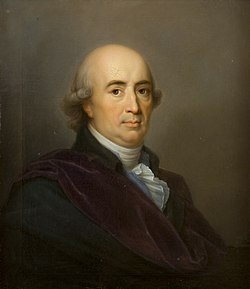
Herder (Source : Wikipedia)

Friday, February 26th, 2016
3:30pm

Carleton University
Paterson Hall
Room 111

lundi 22 février 2016

Shakespeare's ambivalent reception in 18th-Century France (M. Rioux-Beaulne)

Come and help us celebrate the afterlife of Shakespeare as part of the University of Ottawa’s “Shakespeare 400” festivities!

Lunchtime Shakespeare
Winter Term 2016

What: a series of talks by professors from different departments across the University of Ottawa who will show how Shakespeare intersects with their own fields in interesting ways
Where: Simard Hall, room 129
When: selected Fridays in Winter term 2016, from 1:00-2:00pm


The general public and all members of the university community are welcome.


(University of Ottawa)

"Naturel et sublime sans la moindre étincelle de bon goût" : Shakespeare's ambivalent reception in 18th-Century France

Shakespeare (Source : Wikipedia)


Friday, February 26th, 2016
1:00pm

University of Ottawa
Simard Hall
Room 129