mercredi 28 mars 2018

The Hegelian Roots of Russell's Critique of Leibniz (R. Arthur)

Conférence | Talk


(Concordia University)

  
The Hegelian Roots of Russell's Critique of Leibniz
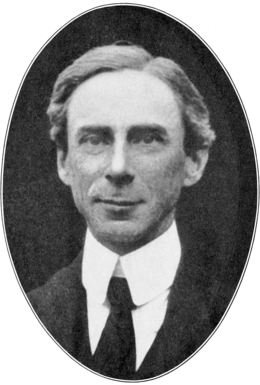
Source : Wikipedia


Friday, April 6th, 2018
2:30pm


University of Ottawa
Desmarais Hall
Room 8161

mardi 20 mars 2018

Merleau-Ponty, 21st-Century Physics, and Natural Time as Phenomenon and Norm of Sense (D. Morris)

Conférence | Talk


(Concordia University)

  
Merleau-Ponty, 21st-Century Physics, and Natural Time as Phenomenon and Norm of Sense


Source : Wikipedia


Movement is central to Merleau-Ponty’s effort to find a sense, meaning, right within being. This effort turns him to a study of perceived movement, which leads him to challenge views that flatten movement into an abstract dislocation between already determinate locations A and B, in an already determinate spatiotemporal framework. Instead, perceived movement first engenders the spatiotemporal context in which it contingently comes to follow a determinate course. Later, he detects this sort of movement in nature itself, especially life. The movement of nature does not simply manifest dislocation within an already determinate space- or time- frame, rather, it indicates a ‘prior’ engendering of space and time as determinate. This indirectly reveals that being itself is not fully determinate, but is an internally deep, open, field. But how are we to understand the peculiar temporality of a movement ‘prior’ to time, that engenders time? I first lead this problem out of Merleau-Ponty. Next I critically engage with physicist Julian Barbour’s recent concept of time as emerging from dynamics, versus time being a fixed background of dynamics. This provides a helpful conceptual model for the sort of temporality in question here—and fits with and is complemented by Merleau-Ponty’s ontology of the invisible and the visible. Barbour leads us into key problems in quantum mechanics, regarding probabilistic, indeterminate being, and measurement. I explore these problems and connect them to time via a model from cryptography, and discussion of how quantum computer programs work (on IBM’s Quantum Experience platform). Linking this with Barbour’s time model lets me suggest a concept of time as a contingent phenomenon that would also be a first norm of sense that fits Merleau-Ponty’s ontology.


Friday, March 23rd, 2018
2:30pm


University of Ottawa
Desmarais Hall
Room 8161

lundi 19 mars 2018

Online Shaming and Imaginal Relationships (K. Norlock)

Conférence | Talk

Presented by Saint Paul University and EPAF Winter Speakers 2018

(Trent University)

  
Online Shaming and Imaginal Relationships


Tuesday, March 20th, 2018
6:30pm

Saint-Paul University
Room G1130

mercredi 28 février 2018

The Puzzle of Skilled Action (M. Mylopoulos)

Conférence | Talk


(Carleton University)

  
The Puzzle of Skilled Action

The puzzle of skilled action is that of explaining how it is that skilled action exhibits robust intelligence despite being largely governed by automatic control processes that are often characterized as brute, reflex-like, and paradigmatically unintelligent. Recently, some have argued that the automatic control involved in skill is sensitive in key respects to the semantic content of an agent’s intentions and other propositional attitude states, and is thereby genuinely intelligent, or "proto-intelligent", contrary to what others have assumed (e.g., Fridland 2014, 2016; Levy 2017). In this talk, I argue that, though automatic control is indeed sensitive to the semantic content of cognitive states, and thereby cognitively permeable, it is nonetheless informationally encapsulated to a significant degree, so that this sensitivity is not the best way to account for its intelligence. I offer an alternative account of the intelligence of automatic control that appeals to hierarchical action representations at a level that is intermediate between intentions and motor representations, and draw out implications of this view for solving the puzzle of skilled action, as well as other nearby puzzles in action theory.

Friday, March 9th, 2018
2:30pm

University of Ottawa
Desmarais Hall
Room 8161