samedi 10 novembre 2018

Ce que l'art nous apprend de l'être humain... (D. Robichaud)

Sur les ondes | On air

(Université d'Ottawa)

Ce que l'art nous apprend de l'être humain...

À l'émission Les Malins 

Samedi, le 10 novembre 2018 (écouter en allant vers 9h45 sur l'audiofil)
Ici Radio-Canada Première Ottawa-Gatineau (90,7 fm)

jeudi 8 novembre 2018

Philosophie et économie (M. Allard)

13 novembre, 2018 - 19:00 - 21:00
Lieu:
Collège universitaire dominicain, 96 avenue Empress, Ottawa (ON)

Philosophie et économie


Philosophie et économie

Conférence publique

13 novembre 2018 - Collège universitaire dominicain

Entre la philosophie et l’économie les rapports sont anciens – ils remontent aux philosophes grecs – et complexes. D’autant plus complexes que l’idée d’économie, les pratiques et institutions économiques ont subi des transformations majeures depuis l’émergence et le développement du capitalisme et de l’État moderne. Cette conférence proposera quelques fils rouges pour comprendre ces rapports et offrir des perspectives sur la place de l’entreprenariat et de l’argent au sein de ceux-ci.

Cette conférence est présentée dans le cadre de Vivre son plein potentiel, un programme de formation en entrepreneuriat parrainé par Eugène Tassé.


Conférencier : Maxime Allard, o.p.

Maxime Allard est dominicain. Détenteur d'un doctorat en théologie de l'Université Laval, il est professeur de philosophie et de théologie au Collège universitaire dominicain à Ottawa (Canada) ainsi qu'au Centre des Études Institutionnelles des Dominicains à Lille (France). Spécialisé en éthique théologique, en philosophie de la religion et en philosophie politique, il est aussi professeur associé à la Faculté de théologie et des sciences des religions de l'Université de Montréal et collabore à la Chaire de recherche "Religion, spiritualité, santé" à l'Université Laval. Suite à des séjours prolongés en Afrique du Sud ainsi qu'au Rwanda et au Burundi, il s'intéresse aux questions des interactions entre le développement économique et social, les régimes politiques et les configurations religieuses

Retributive Justice and Natural Law (P.K. Koritansky)

Date:
Thursday, November 8, 2018 - 19:30
Location:
Dominican University College, 96 Empress Avenue, Ottawa, ON

Retributive Justice and Natural Law

Public Conference

November 8, 2018 - Dominican University College (room 219), 96 Empress Avenue, Ottawa

Speaker: Dr. Peter Karl Koritansky, Associate Professor of Philosophy and Religious Studies, University of Prince Edward Island

With the notable exception of Immanuel Kant, a prevailing theme of modern moral and political thought is the exclusion of retributive justice, or the idea that society has an obligation to punish criminals primarily because those criminals deserve it. This is the rationale behind the modern emphasis on deterrence, rehabilitation, and the physical protection of society from dangerous criminals. Dr. Koritansky will argue that the exclusion of retributive justice is actually quite harmful to society. He will do so by briefly examining and comparing the discussions of punishment by two pre-modern thinkers for whom retributive justice is a central theme: Plato and Thomas Aquinas. He will conclude by suggesting that Thomistic natural law is the best means of understanding retributive justice and by justifying it as a true good for civil society.

Dr. Peter Karl Koritansky attended the Catholic University of America (in Washington DC) as an undergraduate, then he went on to the University of Toronto in 1996 to pursue a PhD in Philosophy. In December of 2001, he defended his doctoral thesis entitled “The Question of Punishment and the Contemporary Relevance of Thomas Aquinas”. He currently teaches at the University of Prince Edward Island. His primary scholarly interest is the history of moral and political thought with an emphasis upon the thought of Thomas Aquinas. He is also interested in the Catholic intellectual tradition and medieval intellectual history.

Cinéma critique | Critical Cinema : Blow-Up

Série Cinéma critique Series

Engager la philosophie avec le film
Engage philosophy through film

Un événement de l'Association des étudiant(e)s diplômé(e)s en philosophie de l'Université d'Ottawa
An event of the Graduate Philosophy Student Association of the University of Ottawa

Blow-Up

Michelangelo Antonioni, 1966


Presented by Patrice Philie (University of Ottawa)

Antonioni's London masterpiece, Blow-Up tells the story of a day in the life of a fashion photographer during the Swinging Sixties. Constructed around a thriller / mystery structure, the film raises and actively examines a whole range of philosophical issues. Famously, photography allows it to discuss themes such as knowledge and proof. But there is much more. The film investigates the nature of a whole generation, it draws our attention to, and comments on, the culture of spectacle and celebrity, it offers a sharp critique of the world of fashion and, through it but not exclusively, of the male gaze, of superficiality, of the impermanence of values. It's also about what it means to exist in such a world - our world today, in many respects.

Patrice Philie is Associate Professor at the Department of Philosophy at the University of Ottawa.


University of Ottawa
 Desmarais Hall (55 Laurier East)


Room 8161

Public Issues and Public Reason Conference


lundi 5 novembre 2018

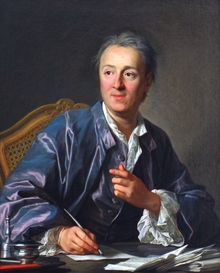
Diderot et l'esthétique de l'intensité (M. Rioux-Beaulne)

Conférence | Talk


(Université d'Ottawa)

  
Diderot et l'esthétique de l'intensité

Source : Wikipédia

Mitia Rioux-Beaulne est professeur au Département de philosophie de l’Université d’Ottawa. Ses recherches portent sur la philosophie française moderne, celle des seizième (Montaigne), dix-septième (Descartes, Malebranche) et dix-huitième (Voltaire, Rousseau, Diderot) siècles. Les questions qui l'intéressent plus particulièrement touchent l'imagination comme faculté de l'esprit; elles sont liées à la connaissance (épistémologie), à la créativité (esthétique) et au progrès historique.


Mardi 06 novembre 2018
14:30


Université d'Ottawa
Pavillon Vanier
Salle 3076

Renseignements : Geneviève Boucher - Genevieve.Boucher@uOttawa.ca